
Digital infrastructure insights
Elevating the customer experience
Welcome
In this series we will looking at the critical role digital infrastructure (DI) plays in delivering an exceptional customer experience (CX), giving businesses that competitive edge.
As businesses battle to find new and improved ways to provide a superior customer experience, it’s become evident just how much customer expectations are evolving. Investing in strategic, well-built digital infrastructure has emerged as one of the most effective ways businesses can provide seamless and personalised experiences across multiple channels, without adding to workloads.
If you're a business looking to make customer experience your differentiator, you've come to the right place. This series features a host thought-leading content and advice from top analysts, influencers and leaders in the DI and CX space. We'll also share some of our own secrets to success.
So, grab yourself a large cup of coffee and get ready to overindulge. Let’s explore how well-oiled digital infrastructure can transform your business and drive it forwards.

1. What is digital infrastructure?
Digital infrastructure is the hardware and software technologies that help support a company’s digital operations. It helps them operate, innovate and meet customer needs.
DI can be made from physical or virtual components. Examples include connectivity, the cloud, security, data centres and applications.
Digital infrastructure is crucial for today’s businesses because it's essentially the foundation upon which their digital systems and services are built. This type of infrastructure allows companies to store, process, and transmit a great amount of data, connect efficiently with customers and partners, and deliver a wide range of digital services on a much larger scale.
Our 2023 Digital Infrastructure report revealed that ‘the majority of IT decision-makers agree intelligent infrastructure can deliver multiple benefits to corporations, colleagues and customers.’

2. The challenges of building digital infrastructure
The adoption of intelligent infrastructure is critical for companies to excel and meet customer expectations. From cloud computing to data analytics, technology has reshaped the way businesses operate, compete and grow.
However, despite the many benefits, building and managing truly agile digital infrastructure can be a tough ask.
Digitising operations is normally a gradual process that takes time and effort. Companies can face barriers such as cost, time and complexity when making important decisions like switching suppliers or upgrading infrastructure. Long-term relationships or contractual obligations may also hinder the transition process. However, the motivations of enhanced customer service, scalability, collaboration, lower costs and more efficient technology often outweigh the barriers.
The most common challenges when it comes to building successful DI typically fall into three categories:
Businesses can work with partners who have experience working across different ecosystems, to help them navigate challenges and make their digital transformation journey easier.
If you are looking to build on and improve your existing infrastructure, you will need to consider the below actions:
- Assess current infrastructure
- Define goals
- Find the right partners
- Develop a plan
- Invest in the right tech & maintenance
- Prioritise cyber security
- Train your people to use the new infrastructure
- Monitor and adjust
- Prioritise data management
Businesses who do these things effectively can remain competitive and look forward to new infrastructure with enhanced performance capabilities that deliver improved customer experiences.
If you’re looking for tips on how to build end-to-end agile digital infrastructure to suit your business needs, our joint whitepaper with Equinix would be a great place to start.
Whitepaper
How to capitalise on your digital infrastructure
Drawing insights from the Fireside Chat between Colt and guest speaker Pascal Matzke, VP and Research Director at Forrester Research, this paper provides practical advice on how to get started with digital infrastructure, underlining the need to transition from traditional, linear transactions to continuous interactions.
Read on to discover how digital infrastructure is not merely a connectivity tool but a catalyst for business value, increased revenue, exceptional customer experiences and enhanced employee productivity.

3. Customer experience through the lens of digital infrastructure
A few years ago, most companies would say it was the quality of their product or service that helped them win new customers.
Today, it’s just as important to provide a high quality, consistent and personalised customer experience. CX has a direct impact on the success and longevity of a business, and well as its bottom line. Customer-centric brands report profits that are 60% higher than those who fail to focus on CX.
A positive customer experience can lead to loyalty, repeat business, increased revenue through upselling, great reviews and referrals, whilst we all know what a bad experience lead to.
Here are just a few recent CX statistics that speak volumes:
Knowledge is key
Today, customers hold the power. Gone are the days when a customer would buy a product or service with little or no research. Technology and the internet has now enabled them learn all they need to about a business and its offerings in seconds.
This goes way beyond just what they offer and how they treat customers but to sustainability and ethical practices.
As a leader in digital infrastructure, we continually seek to enhance our CX efforts. Later in this series, we’ll share some of the tools and metrics that help us consistently exceed customer expectations.

4. Creating a future-proof business: A spotlight on ESG goals and customer needs
As sustainability becomes a core expectation, it's no longer sufficient for companies to simply set sustainability goals.
Technology leaders must now embed ESG (Environmental, Social, and Governance) principles into their infrastructure from the ground up. This approach not only aligns with customer expectations – who increasingly prefer to buy from companies committed to doing the right thing – but also enhances transparency, a crucial factor in today’s purchasing decisions.
To dive deeper into this topic, we welcomed Professor Sally Eaves, a renowned influencer and expert in emerging technologies and their societal impact. Sally, often called the ‘torchbearer for ethical tech,’ discusses three major trends shaping the industry today: digital infrastructure, ESG, and the evolving landscape of customer experience – or as Sally refers to it, the personalisation of experience.
Watch now to gain insights into how these trends are transforming businesses:


5. The Colt experience – what it means for our customers
For over 30 years, Colt has been helping businesses succeed by delivering extraordinary connections with genuine care. We’ve grown from a City of London challenger telecommunications company into a global digital infrastructure business.
We’ve gone from strength to strength, increasing our presence, making an impact through smart investments, bringing invaluable employees onboard (our Colties), building strong partnerships, refining our own DI and, of course, offering customers the best solution to their transformation needs.
Most recently, we acquired Lumen EMEA which elevates us to one of the world’s largest business-to-business-only digital infrastructure companies and an influential global player. This move gives us the opportunity to extend our award-winning customer experience to customers who have moved over from Lumen. It also allows us to offer our own customers an extended portfolio of new services.
IDC’s Spotlight paper on our integration with Lumen EMEA stated, ‘As Colt moves forward, the synergy between past and new networks, technologies, and sustainability initiatives promises to deliver a superior customer experience, marked by seamless connectivity, operational excellence, and a reduced environmental footprint.’
Today, we may be known for our industry-leading net promoter scores and ongoing commitment to sustainability, but we also differentiate ourselves through a little something we like to call the Colt experience.

6. Measuring customer experience at Colt
Customer experience management is on the rise and over 5,000 companies worldwide have a dedicated CX leader, nearly half of whom report to the CEO. CX impacts a company’s bottom line and customers are now willing to pay more for a better CX.
But what does a good customer experience look like? Responsiveness may come to mind, the quality of a product or service, or perhaps a belief that a company actually cares. But this can of course vary depending on who you’re asking and the business they’re thinking of. So, how do you measure a ‘good’ experience and how can the right platform let you do that more effectively?
Delivering an impressive customer experience needs to be a priority for the entire business. There’s no point having it as a focus for some teams, if others are going to treat it as a bonus. For us, it's a key part of our strategy and something every team takes seriously. It’s no secret that employee experience is vital in driving customer experience. Engaged, empowered and fulfilled employees are more likely to deliver exceptional customer service and much more.
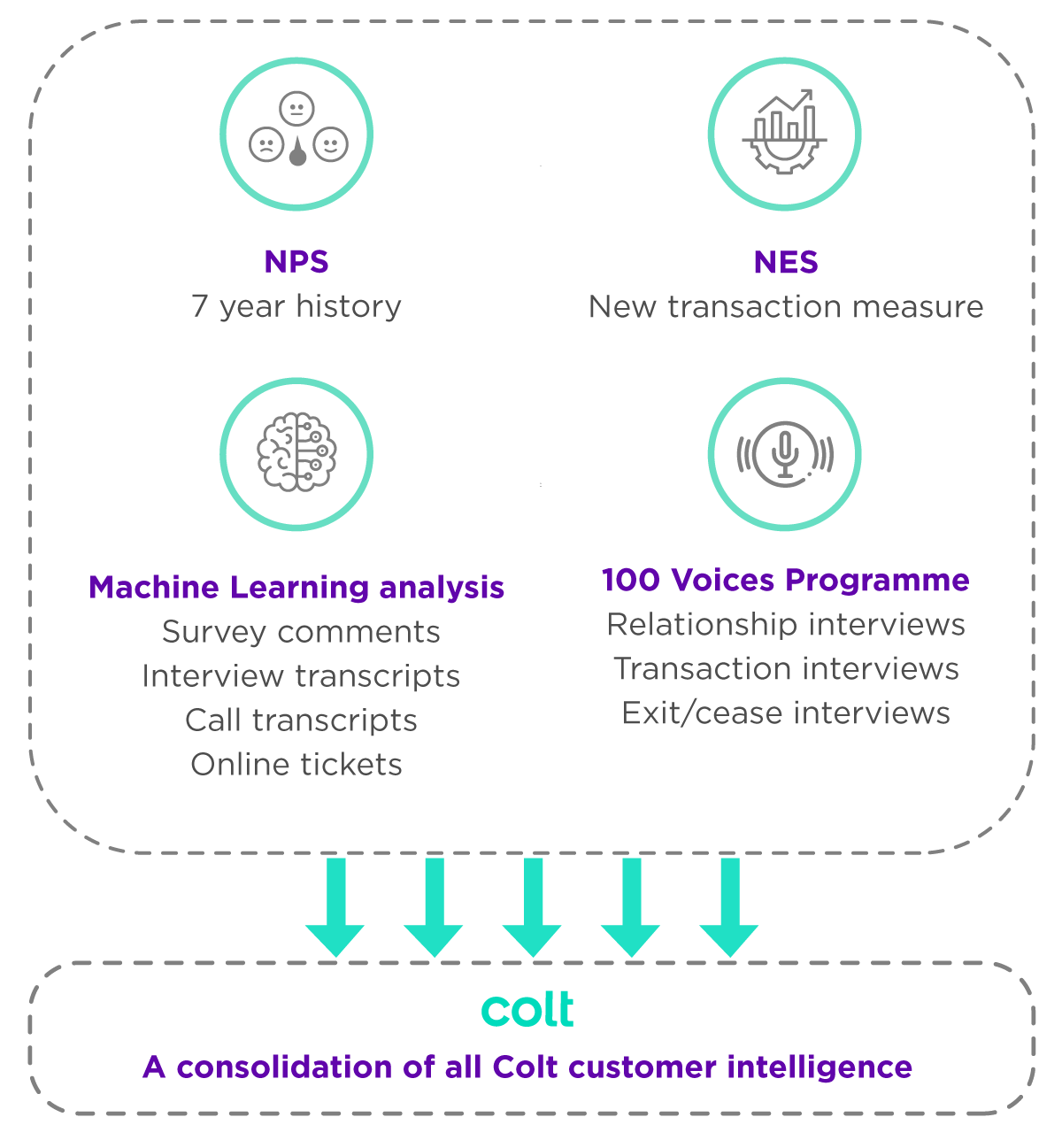
We embrace continuous learning across multiple channels. We listen to our customers to get the fairest and most accurate view, but what really matters is what we do with that information. Listening is great, but acting on what you’ve learned is what counts.
Types of measurement
We take this data, along with insights from customer service tickets, quality scores from our customer facing teams and call transcripts, and apply it to our risk dashboard. This is a custom-built machine learning tool which can be analysed at scale. This allows us to identify trends and gain detailed insights over time. We then present this information back to the business and act on both positive and negative feedback.
We uniquely position ourselves by building digital infrastructure not only for our customers but also for our own operations. Our scalable, responsive and agile foundation allows us to react quickly, empower our teams, and collaborate with partners to deliver tools and products that make a real difference for our customers. This includes enhanced network monitoring tools, improved delivery process insights and closer alignment with our partners.
Our success is driven by the insights we gather, our CX-focused strategy and our dedicated teams. By continuously striving for improvement, we consistently deliver a superior customer experience.

7. The new customer: embracing digitalisation
As technology evolves, so does the way businesses engage with their customers. The future of customer experience is being shaped by advancements in AI, AR/VR, 5G, and robust digital infrastructure.
To stay competitive, businesses must leverage these technologies to meet the demands of the always-connected, tech-savvy customer.
Today’s customers insist on seamless, personalised experiences during every interaction. With rising expectations for real-time service and consistent cross-channel interactions, businesses must prioritise digitalisation to meet their demands.
Key technologies for enhanced CX
- AI and data analytics: AI-driven insights enable personalised experiences by analysing customer behaviour and preferences
- AR/VR and 5G: These technologies can create immersive, engaging experiences and help with fast, reliable service
- Omnichannel engagement: A unified strategy across all platforms ensures consistent customer interactions
The role of DI
Intelligent digital infrastructure is the backbone of successful CX, allowing businesses to scale, manage, and optimise their operations while staying agile and responsive. Now’s the time for companies to assess their tech stack and consider making new investments.
Balancing technology with human interaction
While technology enhances efficiency, the human touch remains vital. Customers still value personal interactions, so a balance between AI and human service is important. Technology should augment not replace genuine human connections. In fact, businesses are now using the power of empathy to drive customer-centric strategies.
Securing data and building trust
As data becomes central to CX, robust security measures are essential. While businesses should be using digitised customer data from different sources to automatically generate insights from their behaviour, protecting this data is non-negotiable. 50% of customers are in fact willing to share their personal information to help create a tailored customer experience.
Next steps
To excel in CX, businesses must embrace digitalisation, leverage data-driven strategies, and maintain a balance between technology and personal service.
Choose the Colt experience
At Colt, we’re dedicated to being your trusted digital infrastructure partner. Contact us today to elevate your customer experience with our industry leading technology and expertise.
Related content

Embracing neurodiversity: Our journey to a more inclusive and innovative workplace

Reflecting on our accessibility journey